
Thank you for attending
ASCEPT would like to thank you for attending the 2023 ASCEPT Annual Scientific Meeting.
The theme for the conference was Transformational Pharmacology and Toxicology and provided an excellent showcase of the excellent research and teaching in the region.
We hope that you found the meeting rewarding and had the opportunity to make new connections and collaborations. We would also like to congratulate the prize winners from the meeting and, of course, our wonderful sponsors.
Below you can view the 2023 keynote speakers, download the PDF program and abstract books.

Assoc Prof Nicola J. Smith
Chair, ASCEPT ASM
Keynote speakers
Opening keynote speaker
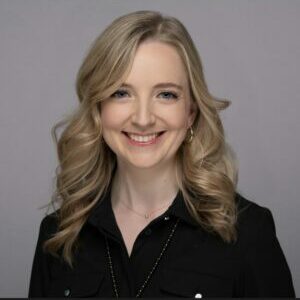
Dr Emily McDonald
Centre for Outcomes Research and Evaluation (CORE)
Dr. Emily G. McDonald is an Associate Professor of Medicine and the Associate Chair of Quality and Safety for the Department of Medicine, McGill University, in Montreal, Canada. Dr. McDonald is a subspecialist in General Internal Medicine and has a Masters in Epidemiology and post-graduate training in QI and Patient Safety from the Centre for Quality Improvement and Patient Safety in Toronto, Canada and from the Harvard T. H. Chan School of Public Health. Dr. McDonald is the Scientific Director of the Canadian Medication Appropriateness and Deprescribing Network (CADeN), and the co-creator and CEO of MedSafer, a software for deprescribing. She co-founded and is a member of the board of WikiGuidelines, a not-for-profit company that develops and publishes guidelines for clinical practice with “the humility of uncertainty”. Dr. McDonald has published over 140 manuscripts in high-impact peer reviewed journals on a broad range of topics related to high value medical care and appropriate use of healthcare resources
Japanese Pharmacological Society speaker
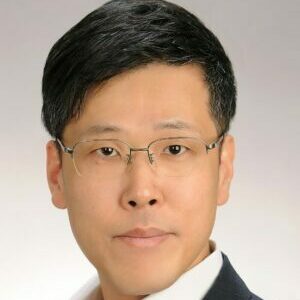
Tomoyuki Furuyashiki
Kobe University Graduate School of Medicine
Tomoyuki Furuyashiki, M.D., Ph.D., is the Professor and Chair at the Division of Pharmacology, Graduate School of Medicine, Kobe University, Japan. He obtained a Ph.D. degree in 2001. In 2003, he became an assistant professor at Kyoto University. From 2004 to 2008, he was an associate research scientist at Johns Hopkins University. Then he returned to Kyoto University as an assistant professor and was promoted to associate professor. In 2014, he was appointed to his current position at Kobe University. Using rodent models, he has elucidated the biological basis, especially neuroimmune mechanisms, of stress-related neuropsychiatric dysfunctions. He is an executive board member of the Japanese Pharmacological Society and the Japanese Society of Neuropsychopharmacology. He is also a member of the Science Council of Japan, contributing to the public relations of Japan’s mental health research community.
British Pharmacological Society speaker
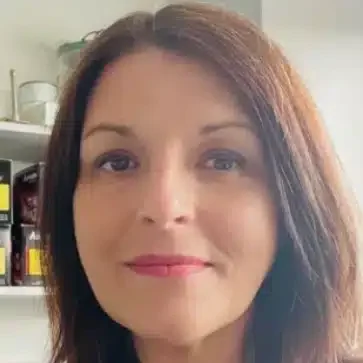
Dr Fiona Murray
The University of Aberdeen
Fiona Murray received her PhD from the University of Glasgow followed by postdoctoral training at UC San Diego in the laboratory of Professor Paul Insel. She served as Assistant Professor in the Department of Medicine, Division of Pulmonary and Critical Care, at UC San Diego, then subsequently retuned to the UK, where she is currently Senior Lecturer at the University of Aberdeen. The goal of Dr Murray’s research is to examine the role of cyclic AMP signalling in disease, in particular pulmonary arterial hypertension and lymphoma, to uncover therapeutic targets. Her current research focuses on the orphan G protein-coupled receptor, GPR75, and re-purposing phosphodiesterase 1 inhibitors. Dr Murray has several industrial collaborations and is the author of original manuscripts, reviews, and book chapters. She is an editor of Cellular Signalling and Frontiers in Physiology and an active member of the Scottish Cardiovascular Form and the British Pharmacological Society.
British Toxicology Society speaker

Prof Marion MacFarlane
University of Cambridge
Prof. Marion MacFarlane is Deputy Director of the UK Medical Research Council (MRC) Toxicology Unit at the University of Cambridge, where she is Principal Investigator on the Mechanisms of Cell Death Program and co-leads the Mechanisms of Fibre Toxicity Program. Marion graduated in Pharmacology (Hons) from the University of Glasgow and on obtaining her PhD in Biochemistry (Industrial-CASE Studentship sponsored by AstraZeneca) from the University of Surrey, was awarded a Wellcome Trust Advanced Training Fellowship in Toxicology. Marion was appointed MRC Programme Leader in 2004 & Deputy Director of the MRC Toxicology Unit in 2012; she also holds an Honorary Chair at the University of Leicester. Marion’s research is focussed on i) understanding the mechanisms that regulate activation of cell death/immune multi-protein signalling platforms that direct the response to toxic insult, and ii) defining signalling networks conferring drug-induced mitochondrial toxicity in translational models of hepatotoxicity/cardiotoxicity.
Rand Medallist speaker

Professor Emeritus Daniel Hoyer
The University of Melbourne
Professor Daniel Hoyer was Chair and Head of Pharmacology and Therapeutics, University of Melbourne (UoM), and a Prof Emeritus since 2021. Professor Hoyer has switched fields multiple times as is common in big Pharma and has lead multidisciplinary teams at Novartis and/or in collaboration with academic institutions or Biotechs, researching on Monoamine receptors and transporters: 5-HT receptors (all except 5-HT5 and 5-HT6), adrenoceptors (alpha1,2 and beta1,2), dopamine (D2, D3 and D4), 5-HTT, NET, DAT. Peptide and other receptors: Orexin, somatostatin (sst1-sst5), endothelin, CRF, NPS, NPY1,2, neurokinin NK1, sphingolipid S1P1-5, Glutamate (mGluR5,7), GABAB. Ligand-gated channels and other receptors: 5-HT3, Glutamate (AMPA, Kainate, NMDA), Nicotinic (alpha4beta2, alpha7), GABAA and peripheral benzodiazepine receptors, FMR1 and FMRP. Professor Hoyer’s lecture will illustrate some historical and more recent basic and translational work done in the 5-HT, somatostatin and orexin fields.