
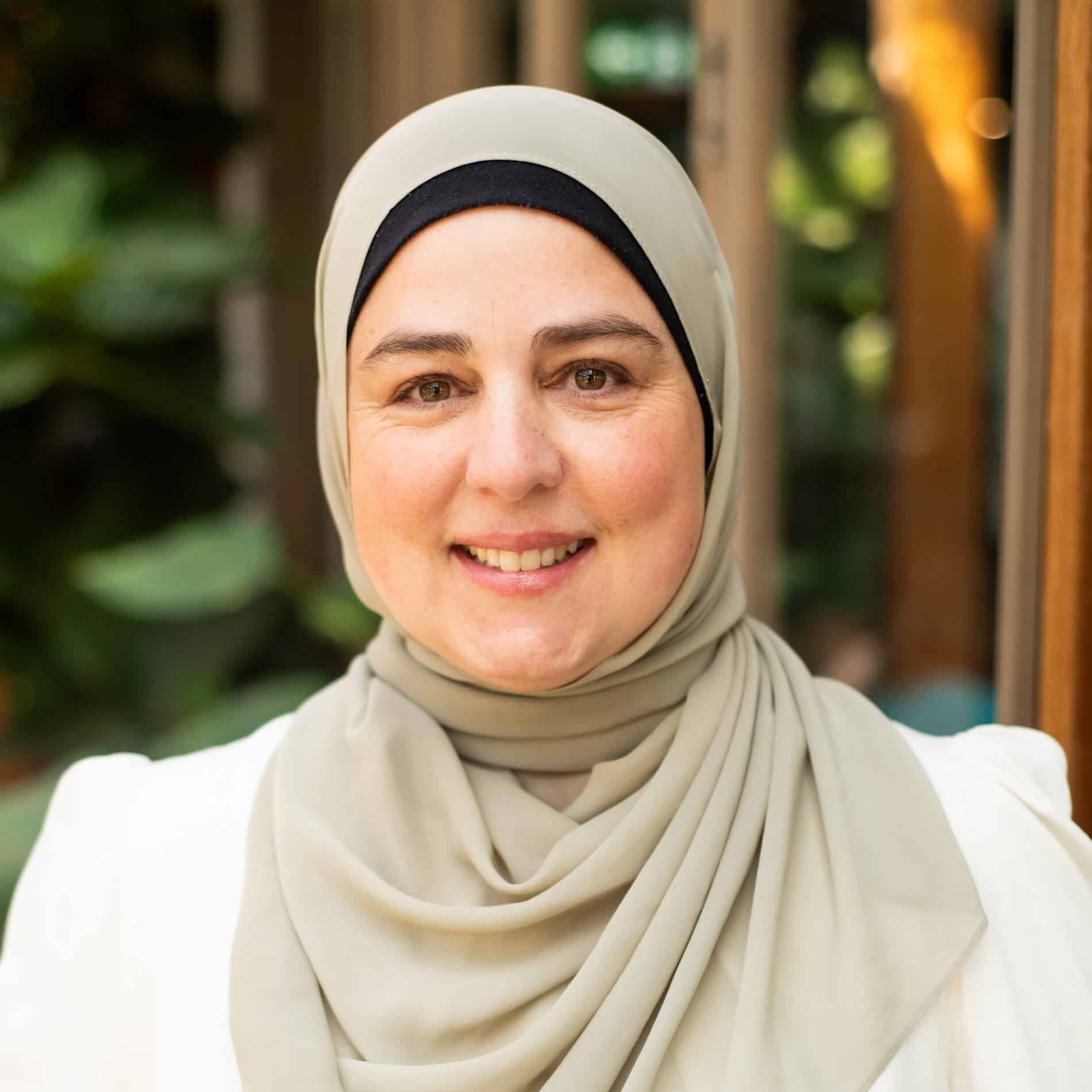
A Q&A with Dr Mouna Sawan
What is your current role, and how long have you been in this position?
Senior Lecturer, School of Pharmacy, Faulty of Medicine and Health, The University of Sydney. I also have over 20 years of experience as a pharmacist.
What are the main projects you are working on right now?
I am a CIA on a MRFF Early to Mid-Career Researcher Grant focused on supporting people with dementia and care to manage medications safely to reduce preventable medication-related harm. This program, developed in collaboration with a 22-member national consortium, employs co-design to create medication management educational tools for use across care settings and aims to enhance medication literacy and safety for patients and their carers. The tools will be made available online and in print as a booklet. This program resulted in five first/senior-author papers, including one co-authored with the consortium, and received 3 national awards, including the 2023 Bellberry New Investigator Award by Australasian Society of Clinical and Experimental Pharmacologists and Toxicologists (ASCEPT), the inaugural 2025 ASCEPT-AMH Felix-Bochner Award and the 2025 Sydney Health Partners Award for Partnering with Consumers in Health Research.
I also a CI on a Dementia Australia Research Fund 2022 Pilot grant to develop and test the first tool called the PRACTICE tool to help RACFs evaluate the organisational culture of residental aged care homes related to psychotropic prescribing in residents living with dementia. This research has directly informed recommendations in the: 1) 2020 New Zealand Health Quality & Safety Commission report, and 2) the 2021 Australian Commissions paper on ‘Updating the guiding principles to achieving continuity in medication management’. Both documents highlight the important role of organisational culture and the use of the tool to ensure residents with dementia receive quality care.
How did you get started in your field?
My clinical experience as an accredited pharmacist working in residential aged care facilities (RACFs) fuelled my interest to pursue a PhD focused on improving medication safety for older adults. Through this work, I saw firsthand the importance of collaborating effectively with prescribers and aged care staff to optimise medication management. I was particularly inspired by with RACF staff to uncover how organisational culture, the shared values, beliefs and practices of RACF, shapes psychotropic prescribing in residents living with dementia.
It was the genuine commitment these staff demonstrated toward ensuring the best possible care for residents that motivated me to investigate this complex phenomenon in a way that could inform meaningful policy and guidelines.
It became clear that medication safety is a shared responsibility across the care team, and that meaningful involvement of residents and their carers is essential to achieving safe, person centred care.
Are there any achievements or milestones you’re particularly proud of?
I am particularly proud of working closely with people with direct lived experience, people living with dementia and carers, to co design user centred medication resources that genuinely reflect their priorities. This work not only highlights their right to be involved in decisions about their care, but also supports them in knowing how to ask questions and engage confidently with prescribers and health care professionals to manage medications safely.
What aspects of your work do you enjoy the most?
I enjoy collaborating with my academic colleagues, and continuously expanding my knowledge, sometimes even beyond my own discipline. It is exciting to learn from each other and to see how different perspectives enrich our work. I am also grateful and inspired by partnering with people with lived experience. Their generosity, wisdom, and openness consistently ground my work and remind me of the real world impact and responsibility we hold as researchers.